
Peripheral neuropathy is one of those conditions that quietly steals quality of life. It usually starts as numbness, tingling, or a faint burning sensation in the hands or feet — symptoms easy enough to dismiss for a few weeks or months. Left untreated, it gets worse. Pain becomes constant. Balance suffers. Falls become a real risk. And the medical system’s default toolkit for peripheral neuropathy — medications, steroid injections, and sometimes surgery — comes with its own side effects and often doesn’t address the underlying nerve damage at all.
A good chiropractor for peripheral neuropathy takes a different approach: less invasive, more targeted at restoring nerve function, and often dramatically more effective for the right patients. Below are the three methods chiropractors commonly use to treat peripheral neuropathy, what each one actually does, and — importantly — what advanced clinics like Apex add when the basics aren’t enough.
When peripheral neuropathy needs immediate medical attention
Most peripheral neuropathy is chronic and progressive but not acutely dangerous. However, see a physician or emergency room immediately if you have any of the following: sudden onset of numbness or weakness, rapid progression of symptoms over hours or days, loss of bladder or bowel control, severe unexplained pain, or symptoms following a recent illness or new medication. These can indicate Guillain-Barré syndrome, spinal cord compression, or other urgent conditions that require medical management.
Once acute causes have been ruled out, chiropractic care is one of the most effective non-invasive options for the much larger group of chronic peripheral neuropathy cases — including diabetic, chemotherapy-induced, idiopathic, and compression-related neuropathy.
What Is Peripheral Neuropathy?
Peripheral nerves are the nerves that run from your brain and spinal cord into the rest of your body. When those nerves get damaged — by disease, injury, toxin exposure, or compression — the result is peripheral neuropathy: a malfunction in how the nerves transmit signals between the body and the central nervous system.
There are three primary types of peripheral nerves, and the symptoms you experience depend on which type is affected:
- Motor nerves control muscle movement. Damage produces weakness, muscle cramping, muscle atrophy, and difficulty with walking, standing, or gripping.
- Sensory nerves control sensation. Damage produces tingling, numbness, burning pain, balance problems, and spontaneous nerve pain (called neuropathic pain) that occurs without any external trigger.
- Autonomic nerves control involuntary body functions. Damage produces blood pressure swings, breathing problems, digestive disruption, bladder issues, sexual dysfunction, and abnormal sweating.
Most patients we see have predominantly sensory or mixed sensorimotor neuropathy — the numbness, tingling, burning, and balance issues that affect daily life without immediately threatening it. (For a more detailed symptom breakdown, see our blog on the 5 most common symptoms of peripheral neuropathy.)
What Causes Peripheral Neuropathy?
The list of potential causes of peripheral neuropathy is long, but the most common include:
- Diabetes — the single most common cause of peripheral neuropathy in the United States. (See our dedicated guide to diabetic neuropathy if blood sugar is your primary concern.)
- Chemotherapy — many cancer treatments damage peripheral nerves as a side effect. Our cancer support services are specifically designed to address chemotherapy-induced neuropathy alongside other treatment side effects.
- Spinal compression and stenosis — nerve compression at the spinal level can cause neuropathy symptoms in the extremities.
- Autoimmune conditions — including lupus, rheumatoid arthritis, and Sjögren’s syndrome.
- Vitamin deficiencies — particularly B12, B6, B1, and vitamin E.
- Chronic alcohol use — alcohol is directly neurotoxic to peripheral nerves. Substance abuse treatment often improves neuropathy outcomes substantially.
- Infections — including Lyme disease, shingles, hepatitis, and HIV.
- Toxin exposure — heavy metals, certain industrial chemicals, and some medications.
- Trauma — direct nerve injury from accidents, surgery, or repetitive stress.
Identifying and addressing the underlying cause is the first step in any effective treatment plan. (Read more on why peripheral neuropathy needs to be taken seriously rather than waited out.)
3 Ways a Chiropractor Treats Peripheral Neuropathy
1. Spinal Decompression Therapy
Spinal decompression therapy is a gentle, gradual stretching of the spine performed on a specialized decompression table. The table uses pulleys and harnesses to create controlled separation between vertebrae, which relieves pressure on the discs and nerves that exit the spine.
For peripheral neuropathy, decompression is the method of choice when nerve compression at the spinal level is contributing to symptoms in the extremities. Decompression also dramatically increases blood flow throughout the spine and the nerves that branch from it — and blood flow is the limiting factor in nerve healing. When pressure on peripheral nerves decreases and circulation improves, symptoms often follow.
2. Spinal Adjustments and Manipulation
The target of chiropractic adjustments is the spine itself — specifically, the small misalignments (subluxations) that interfere with nerve transmission. When those misalignments are corrected, pressure on the spinal nerves is released, and signaling between the brain and the affected extremities improves.
At Apex we use the Torque Release Technique — the first chiropractic technique developed entirely from peer-reviewed research. The Integrator instrument delivers adjustments at 1/10,000th of a second, faster than muscles can guard against. That gentleness matters specifically for neuropathy patients, many of whom are older, dealing with osteoporosis, or have other conditions that make traditional high-velocity manual adjustments inappropriate.
When applied correctly to the right patient, adjustments can produce:
- Reduced neuropathic pain
- Improved blood flow to compromised nerves
- Improved range of motion in stiffened joints
- Restored motor function as nerve signaling improves
3. Low-Level Light Therapy (Red and Infrared)
Low-Level Light Therapy (LLLT), sometimes called cold laser therapy, uses red and near-infrared light wavelengths — typically in the 600 to 1,000 nanometer range — to penetrate soft tissue and stimulate cellular activity in damaged nerves. (The “cold” part means it doesn’t generate heat; older descriptions referring to blue or green wavelengths are out of date. Modern therapeutic light for nerve repair is infrared.)
The mechanism is well-documented: red and infrared light triggers the release of vascular endothelial growth factor (VEGF), which signals the body to create new blood vessels (angiogenesis) around damaged nerves. Those new vessels deliver oxygen and nutrients to nerve tissue that had been starved of both. The result is genuine nerve repair, not just symptom management.
This is the same underlying technology Apex uses in our red light therapy for pain management service, and it’s a central component of our four-prong neuropathy protocol described below.
When the basic three aren’t enough: Apex’s four-prong neuropathy protocol
The three methods above describe what most chiropractors offer. They help — but for advanced or stubborn neuropathy, three modalities working alone often plateau. Apex’s peripheral neuropathy treatment program combines those modalities with two additional pieces that most clinics don’t offer, producing measurably better outcomes for patients whose neuropathy didn’t respond fully to spinal care alone.
What Sets Apex’s Peripheral Neuropathy Program Apart
Our peripheral neuropathy treatment program uses four coordinated components — what we call the four-prong approach. According to outcomes Apex has tracked across patients nationally and the body of LLLT research underpinning the protocol, the program has been reported to produce success in approximately 97% of treated patients.
1. Electromagnetic Infrared Therapy
The expanded version of the LLLT described above. Our medical-grade infrared therapy is calibrated to stimulate VEGF and angiogenesis around peripheral nerves specifically — driving the formation of new capillaries that deliver oxygen and nutrients directly to the damaged nerve fibers. The LLLT technology underlying this approach has been the subject of 21 peer-reviewed studies in peripheral neuropathy applications.
2. Nerve Re-Education Therapy
A state-of-the-art device that helps regrow and retrain peripheral nerves — the same protocol used by the Cancer Centers of America for chemotherapy-induced neuropathy. Many patients can use this technology at home as well as in clinic, which means consistent daily therapy rather than waiting for weekly office visits. Patients often report immediate improvement in pain levels and gradual restoration of normal sensation over weeks.
3. Advanced Nutrition Therapy
Nerve repair has specific nutritional requirements — methylated B vitamins, alpha-lipoic acid, omega-3 fatty acids, and bioavailable nitric oxide precursors, among others. Patients eating an otherwise “healthy” diet are frequently deficient in the exact nutrients peripheral nerves need to heal. Our customized nutritional protocols address those deficiencies directly. (For broader context on how nutrition fits into overall health, see our take on the 5 pillars of health.)
4. Customized In-Clinic and At-Home Program
Every patient’s neuropathy is different — different cause, different stage of progression, different complicating conditions. The fourth prong of our protocol is the personalized treatment plan we build for each patient after a thorough 3 Part NeuroTECH Exam — combining in-clinic treatments with at-home therapies and lifestyle changes. For patients who can’t travel regularly (a common issue with mobility-limiting neuropathy), we can ship equipment and coordinate remote care.
One overlooked piece: chronic pain, anxiety, and sleep
Chronic peripheral neuropathy frequently produces anxiety, sleep disruption, and depression — and those mental-health symptoms in turn slow nerve healing through elevated cortisol and impaired sleep architecture. Patients who address the emotional side of chronic pain alongside the physical treatment consistently recover faster. See our blog on how a chiropractor helps with anxiety and stress for more on this loop and how to break it.
Frequently Asked Questions
Can chiropractic care reverse peripheral neuropathy?
For some patients, yes — particularly those with neuropathy caused by spinal compression, vitamin deficiencies, or early-stage damage that hasn’t progressed too far. For others, especially long-standing or severe diabetic neuropathy, the realistic goal is significant improvement in symptoms and function rather than complete reversal. The earlier you start treatment, the better the outcomes. Apex’s program is designed to optimize that potential through multiple coordinated mechanisms rather than relying on any single treatment.
How quickly will I see results?
It varies. Some patients report meaningful improvement in pain and sensation within the first few weeks. Others, particularly those with longer-standing nerve damage, see gradual improvement over three to six months. Nerve repair is biologically slow — peripheral nerves regrow at roughly one millimeter per day under ideal conditions — so consistent treatment over time is essential.
Will insurance cover chiropractic care for peripheral neuropathy?
Coverage varies by insurer and plan. Our front desk can verify your specific benefits before you start treatment. Apex also offers a $49 Nerve Screening Special for new patients, which provides a complete neuropathy evaluation and lets you understand your treatment options before making any larger commitment.
Is this treatment safe for diabetic neuropathy?
Yes — diabetic neuropathy is one of the most common conditions we treat. The four-prong protocol is safe to use alongside diabetes management, and many patients see improvements in both neuropathy symptoms and broader metabolic markers as treatment progresses. See our dedicated diabetic neuropathy guide for more.
What about chemotherapy-induced neuropathy?
Chemotherapy-induced peripheral neuropathy (CIPN) responds well to our protocol — the Nerve Re-Education component is the same technology used at Cancer Centers of America for exactly this purpose. Coordinate with your oncologist before starting treatment, but for most patients CIPN is well-managed in parallel with ongoing cancer care.
What does the first appointment look like?
You can read what to expect on your first day for the full walkthrough. For neuropathy patients specifically, the initial visit centers on a thorough neurological exam, full history review, and the development of an individualized treatment plan based on the cause and stage of your condition.
Start With a $49 Nerve Screening
If you’ve been managing peripheral neuropathy symptoms — or if your physician has recommended medications and you’d like to explore a non-invasive option first — start with our $49 Nerve Screening Special. You’ll get a complete neuropathy evaluation, learn whether you’re a candidate for our four-prong protocol, and leave with a clear understanding of your treatment options. We see patients from across Louisville, Boulder, Broomfield, Lafayette, Erie, Westminster, and Weld County.
Schedule your $49 Nerve Screening · Call (720) 328-1790 · Contact us
About the Author
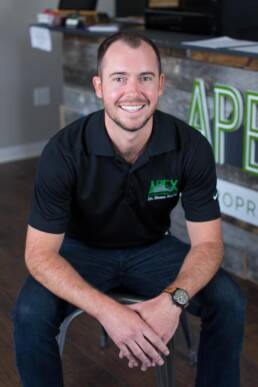
Dr. Shane Kurth, D.C., BCN is the founder of Apex Chiropractic in Louisville, Colorado, and is board-certified in chronic intractable pain and neuropathy — the specific credential most relevant to the care of peripheral neuropathy patients. A graduate of Auburn University with a degree in microbiology, Dr. Kurth has built one of Boulder County’s leading chiropractic practices around neurologically-based care using the research-driven Torque Release Technique. He has been voted Best Chiropractor in Boulder County for ten consecutive years by the readers of Boulder Weekly.
Dr. Kurth treats peripheral neuropathy patients throughout Louisville, Superior, Lafayette, Broomfield, Erie, Boulder County, and Weld County, and offers remote care coordination for patients with mobility limitations. He is an active member of the International Chiropractic Association (ICA) and the International Federation of Chiropractors & Organizations (IFCO). Learn more about Dr. Kurth →

Ready to See the Best Chiropractor in Louisville, CO?
Apex Chiropractic believes in thriving through life, not suffering in it. We believe that the activities that we want to partake in do not only desire but are necessary, just as necessary as our daily activities. In order to thrive in life and not suffer, we have to be completely in tune with our bodies. Schedule your appointment with us, today.
Like this article? Spread the word!
Related Posts

June 29, 2023
The Potential Mechanism of COVID Vaccine-Induced Peripheral Neuropathy: Numbness and Tingling in the Hands and Feet
Discover the potential mechanism behind COVID vaccine-induced peripheral neuropathy and…

June 9, 2023
Diabetic Neuropathy: Understanding the Connection Between Diabetes and Nerve Damage and How Chiropractic Care Can Help
Explore the connection between diabetes and nerve damage in our informative blog on…

April 10, 2023
Guide to Complex Regional Pain Syndrome
Complex regional pain syndrome causes substantial pain that interferes with completing…


