When patients ask about non-invasive body contouring options at our Louisville office, the question is almost always some variation of: “What’s the difference between red light therapy, CoolSculpting, and liposuction — and which one is right for me?” The honest answer is that each has genuinely different strengths, risks, and ideal patient profiles. There isn’t a single “best” option; there’s the option that fits your specific goals, timeline, risk tolerance, and budget.
This article walks through an honest comparison of red light therapy vs. CoolSculpting vs. liposuction — what each actually does, the realistic safety and effectiveness tradeoffs, downtime expectations, and who each is best suited for. We do offer red light body sculpting at Apex (and we’ll explain why we chose that approach), but this comparison is meant to help you make an informed decision — including the decision that one of the other options might fit your situation better.
Important context: body contouring is not weight loss
All three procedures discussed here are body contouring treatments — they address localized fat deposits in specific body areas. None of them is a weight loss solution in the broader sense. None replaces consistent exercise, sound nutrition, adequate sleep, and the broader lifestyle work that drives sustainable weight management. (For our take on the broader picture, see our blog on the 5 pillars of health.) Body contouring procedures are best understood as targeted refinements of areas that aren’t responding to lifestyle work — not as substitutes for that work.
What Each Procedure Actually Is
Liposuction
Liposuction is a surgical procedure performed by plastic surgeons under anesthesia. Small incisions are made in the targeted area, and a thin cannula is used to physically remove fat through suction. Multiple techniques exist (tumescent, ultrasound-assisted, laser-assisted, power-assisted), but all share the basic mechanism of surgically removing fat tissue.
Liposuction produces the most dramatic results per procedure — significant amounts of fat can be removed in a single surgery. Recovery typically takes weeks, and the procedure carries the standard surgical risk profile (anesthesia complications, infection, bleeding, contour irregularities, in rare cases more serious complications). Cost typically ranges from several thousand dollars to ten thousand or more depending on the surgeon, technique, and number of areas treated.
CoolSculpting (Cryolipolysis)
CoolSculpting is the brand name for cryolipolysis — an FDA-cleared, non-surgical fat reduction technology that uses controlled cooling to selectively damage fat cells while sparing surrounding skin and tissue. The fat cells are damaged at the molecular level (cooled to approximately -11°C) and then naturally eliminated by the body over the following weeks and months. Performed at medical spas, dermatology offices, and some plastic surgery practices.
Clinical studies typically show approximately 20-25% fat reduction in the treated area after one session, though results vary substantially by patient and treatment area. Downtime is modest — temporary numbness, bruising, and soreness are common, typically resolving within days to weeks. Cost typically runs $750-$2,000 per treatment area, with multiple sessions often recommended.
Red Light Therapy (Low-Level Laser Therapy / Photobiomodulation)
Red light therapy (also called Low-Level Laser Therapy, LLLT, or photobiomodulation) is a non-invasive light-based treatment that uses specific wavelengths of red and near-infrared light (typically 635-680nm for body contouring applications) to stimulate cellular processes in fat cells. The mechanism is different from both CoolSculpting and liposuction: rather than freezing or removing fat cells, red light therapy causes fat cells to temporarily release their contents — fatty acids, glycerol, and water — which the body then processes and eliminates through normal metabolic pathways.
Results are more modest per session than the other two options but accumulate over multiple sessions. The risk profile is genuinely minimal — no anesthesia, no incisions, no significant complications documented in the clinical literature. Cost per session is typically lower than CoolSculpting, though multiple sessions are usually recommended for meaningful cumulative results.
Honest Comparison: How They Actually Differ
Safety
Liposuction has the highest risk profile of the three. The risks are well-documented and well-managed by qualified surgeons, but they’re real: anesthesia complications, infection, bleeding, seroma formation, contour irregularities, asymmetry. In rare cases, more serious complications including fat embolism, deep vein thrombosis, or visceral injury have been reported.
CoolSculpting has a much lower risk profile but isn’t risk-free. Common side effects include temporary numbness, bruising, and soreness. A notable complication is paradoxical adipose hyperplasia (PAH) — a rare reaction where treated tissue grows larger rather than smaller. PAH gained widespread attention through the 2021 Linda Evangelista case. The complication is uncommon (reported rates vary, with newer estimates higher than originally documented), but patients considering CoolSculpting should know about it before deciding.
Red Light Therapy has the lowest risk profile by a significant margin. The clinical literature documents very few adverse effects, none serious. For patients with a low risk tolerance, this is the genuine advantage of the red light approach.
Effectiveness Per Session
This is where the honest framing matters most. Liposuction is the most effective per procedure — surgical removal can address significant fat deposits in a single session. CoolSculpting is moderately effective per session — typically producing ~20-25% fat reduction in the treated area per treatment. Red light therapy is the most modest per session — results are gradual and cumulative, typically requiring multiple sessions for visible change.
Red light therapy is the safest option but not the most effective in absolute fat reduction terms. Saying otherwise — as some red light therapy marketing does — sets patients up for disappointment. The honest framing: red light therapy produces meaningful, gradual results with minimal risk; patients who want dramatic single-procedure transformation are looking at the other two options.
Downtime
- Liposuction: Multiple weeks of recovery. Compression garments, limited activity, swelling that resolves gradually.
- CoolSculpting: Days to a couple of weeks for bruising, soreness, and numbness to resolve. Most patients return to normal activity immediately.
- Red Light Therapy: No downtime. Patients return directly to normal activity.
Cost
Cost varies significantly by location, provider, and specific treatment area. Rough ranges:
- Liposuction: Several thousand to ten thousand dollars or more per procedure
- CoolSculpting: $750-$2,000 per treatment area per session, multiple sessions often recommended
- Red Light Therapy: Generally lower per session than CoolSculpting, with multiple sessions typically recommended for cumulative effect
Total cost depends heavily on how many areas are treated and how many sessions are needed. None of these procedures is typically covered by insurance.
Quick reference: which procedure fits which patient
- Liposuction may be the right fit if: You have significant amounts of fat to remove in specific areas, you want dramatic results in a single procedure, you’re prepared for surgical recovery, and you’re comfortable with surgical risk. Best evaluated by a board-certified plastic surgeon.
- CoolSculpting may be the right fit if: You have specific stubborn fat pockets that haven’t responded to diet and exercise, you want non-surgical but accept some downtime, and you’re willing to wait weeks to see results.
- Red Light Therapy may be the right fit if: You’re risk-averse, you want a gradual cumulative approach, you have no tolerance for downtime, you’re already pursuing lifestyle changes and want a low-risk supportive modality, or you also want the additional benefits red light therapy provides (skin support, circulation, recovery).
Why Apex Chose Red Light Therapy as Our Body Contouring Approach
Apex Chiropractic offers red light body sculpting as our body contouring service. We don’t offer CoolSculpting or perform liposuction — and that’s an intentional choice based on what fits our broader practice approach.
Red light therapy fits with how we approach wellness generally: low-risk, evidence-informed, complementary to lifestyle work rather than substitutive of it, and integrated with our other modalities. Patients pursuing body composition goals through red light body sculpting at Apex typically combine it with:
- Objective tracking via our Styku 3D Body Scanner, which provides precise circumferential measurements over time
- Recovery support through our full spectrum infrared sauna and other recovery modalities
- Broader wellness coordination with our chiropractic care, exercise support, and nutritional guidance
- Athletic recovery integration for our active patients — see our chiropractic for sports recovery framework
For patients whose situation calls for CoolSculpting or liposuction, we recommend qualified providers in those specialties rather than steering everyone toward our own modality. The right body contouring choice is the one that fits your specific situation — sometimes that’s red light therapy, sometimes it isn’t. (For a deeper explanation of what red light body sculpting actually does and how it works, see our broader blog on red light body sculpting.)
Frequently Asked Questions
How many sessions of red light therapy will I need?
It varies by individual and goals. Most patients see meaningful results from a course of 6-12 sessions over several weeks. Some patients pursue ongoing maintenance sessions after the initial course. We discuss realistic expectations during the initial consultation based on your specific situation, body composition, and goals.
Does red light therapy actually work for fat reduction?
Yes, for appropriate applications and realistic expectations — but more modestly than the dramatic claims sometimes seen in marketing. Multiple clinical studies have documented measurable fat reduction with red light therapy at specific wavelengths, applied at appropriate intensities and durations. The effect is real and reproducible; it’s also more gradual and modest than what surgical or cryolipolysis alternatives produce per session.
Can I combine red light therapy with diet and exercise?
That’s actually the ideal use case. Red light therapy works best as a supportive modality alongside the lifestyle work that drives sustainable body composition change — not as a substitute for it. Patients who combine consistent exercise, sound nutrition, and red light therapy consistently see better results than those pursuing any one of these in isolation.
Are red light therapy results permanent?
The mechanism is different from procedures that destroy or remove fat cells. Red light therapy causes fat cells to release their contents — the cells themselves remain, just emptied. Without supporting lifestyle work (continued exercise, sound nutrition), fat cells can refill over time. With sustained lifestyle work, results typically hold. This is one of the reasons we emphasize that red light therapy complements lifestyle change rather than replaces it.
What about combination treatments — can I do red light therapy if I’ve already had CoolSculpting or liposuction?
Often yes, with appropriate timing. Patients who’ve had CoolSculpting or liposuction can use red light therapy for ongoing maintenance and additional refinement. We coordinate with your other providers and ensure appropriate healing time before starting red light therapy after surgical procedures.
Will my insurance cover any of these?
Cosmetic body contouring procedures — whether red light therapy, CoolSculpting, or liposuction — are generally not covered by insurance. Some specific medical indications for related light therapies may have coverage; our front desk can verify your specific situation. We also offer new patient specials for patients new to the practice.
How is red light therapy for body contouring different from red light therapy for pain?
Same underlying technology, different application protocols. Red light therapy for pain management uses similar wavelengths but applied to different tissues at different intensities for different therapeutic effects. The body sculpting application uses specific wavelengths (typically around 635nm) and protocols calibrated specifically for fat cell effects.
What does the first visit look like?
See our complete walkthrough of what to expect on your first day. For body contouring patients specifically, the first visit includes a discussion of your goals, body composition baseline (we often start with a Styku 3D Body Scan for objective measurement), realistic expectations based on your situation, and development of a treatment plan that fits your overall wellness picture.
Considering Body Contouring? Let’s Talk About What Actually Fits.
If you’re trying to figure out which body contouring approach is right for your situation, schedule a consultation. We’ll discuss your goals, walk through realistic expectations for each option, and help you decide whether red light therapy at Apex is the right fit — or whether one of the other options might serve you better. We serve patients across Louisville, Boulder, Lafayette, Erie, Broomfield, Superior, Frederick, and the greater Boulder County area.
Call (720) 328-1790 or contact us to schedule. New to the practice? Take advantage of our new patient specials. Learn more about our red light body sculpting program.
About the Author
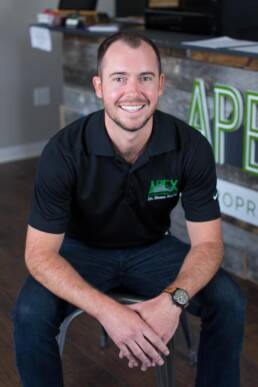
Dr. Shane Kurth, D.C., BCN is the founder of Apex Chiropractic in Louisville, Colorado, and is board-certified in chronic intractable pain and neuropathy. A graduate of Auburn University with a degree in microbiology, Dr. Kurth has built one of Boulder County’s leading chiropractic practices around neurologically-based care using the research-driven Torque Release Technique alongside complementary wellness modalities including red light body sculpting, medical-grade red light therapy for pain, and full spectrum infrared sauna. He has been voted Best Chiropractor in Boulder County for ten consecutive years by the readers of Boulder Weekly.
Dr. Kurth approaches body contouring and wellness as evidence-informed, complementary to lifestyle work, and honest about what each modality can and cannot accomplish. He treats patients across Louisville, Superior, Lafayette, Broomfield, Erie, and the greater Boulder area, and is an active member of the International Chiropractic Association (ICA) and the International Federation of Chiropractors & Organizations (IFCO). Learn more about Dr. Kurth →
This article is general information. For specific medical guidance about your individual situation, consult a licensed physician. For body contouring decisions, consultation with multiple providers including a board-certified plastic surgeon is reasonable due diligence for any non-trivial procedure.

Ready to See the Best Chiropractor in Louisville, CO?
Apex Chiropractic believes in thriving through life, not suffering in it. We believe that the activities that we want to partake in do not only desire but are necessary, just as necessary as our daily activities. In order to thrive in life and not suffer, we have to be completely in tune with our bodies. Schedule your appointment with us, today.
Like this article? Spread the word!
Related Posts
December 13, 2023
Shaping the Future: Understanding Laser Liposuction as a Healthy Path to Fat Loss
Discover the future of fat loss with laser liposuction! Explore how this innovative…

September 1, 2023
Accelerating Recovery: The Superiority of Medical-Grade Red Light Therapy for Muscle Recovery
Discover the unmatched benefits of medical-grade red light therapy for muscle recovery.…

September 1, 2023
Rediscovering Radiance: Red Light Therapy for Skin Rejuvenation vs. Other Alternatives
Explore the rejuvenating power of Red Light Therapy and compare it to other skin…


