



If you live in Boulder County the way Boulder County is meant to be lived in, you’re hiking the Mesa Trail in summer, skiing Eldora in winter, riding your bike to work in spring, and running the foothills year-round. Colorado rewards an active life — and asks for some wear and tear in return. Most of the people who come into our Louisville office for joint pain aren’t suffering from chronic conditions in the traditional sense. They’re outdoor athletes whose knees, hips, shoulders, or backs are starting to interfere with the activities that define their lives here.
This is exactly the kind of joint pain that conservative chiropractic care is most useful for. Not because chiropractic is a substitute for medical care when something serious is going on, but because for the much larger category of Colorado-active-lifestyle joint pain, the conservative path — adjustments, soft tissue work, targeted modalities, addressing the kinetic chain — typically produces better long-term outcomes than either medication or surgery alone. This article walks through what joint pain relief in the Boulder area actually looks like, which joints we most commonly treat, and when to see a doctor first instead.
See a medical doctor first if your joint pain comes with any of these
Most joint pain is manageable through conservative care, but some presentations require immediate medical evaluation rather than chiropractic:
- Sudden severe pain after trauma – possible fracture or ligament tear
- Red, hot, swollen joint with fever – possible septic joint (medical emergency)
- Locked joint or mechanical blocking – possible meniscus tear, loose body, or labral tear
- Inability to bear weight on the affected limb
- New severe joint pain with systemic symptoms (fever, fatigue, multiple joints) – possible autoimmune flare
- Calf swelling, redness, or warmth with knee pain – possible deep vein thrombosis (DVT)
- Suspected dislocation or visible joint deformity
For chronic aches, overuse pain, arthritis, post-injury stiffness, and the wear-and-tear that comes with an active Colorado life – chiropractic care is a reasonable and often highly effective place to start.
The Boulder Active Lifestyle Is Hard on Joints
Most patients in our practice live some version of this pattern: a desk job during the week, a trail or peak on the weekend, and an evening or two of cycling, climbing, lifting, or skiing thrown in for good measure. The cumulative wear on joints from this kind of life shows up in predictable places:
- Hiking – knees from descents, ankles from uneven terrain, hips from sustained uphill load
- Skiing and snowboarding – knees most commonly (ACL injuries, meniscus wear, patellofemoral pain), but also lower back, hips, and shoulders from falls
- Trail running – knees, hips, ankles, IT band, plantar fascia
- Cycling – hips, lower back, neck, wrists, knees from improper bike fit
- Climbing – fingers, wrists, elbows (medial epicondylitis – “climber’s elbow”), shoulders
- Lifting and CrossFit – shoulders, knees, lower back from form breakdown under load
- Yoga – SI joints, shoulders, wrists, knees from sustained end-range positions
What unites all of these patterns is that joint pain rarely originates in just one joint. The body is a connected kinetic chain, and dysfunction anywhere along it tends to produce symptoms downstream. Understanding that connection is what separates effective joint pain treatment from symptomatic pain management.
How Big Is the Problem, Really?
The current CDC data puts arthritis alone at roughly 58.5 million US adults, with about 25.7 million experiencing arthritis-attributable activity limitation. Joint pain in active populations is even more common – many of the joint complaints we see in Boulder-area patients are pre-arthritis, the kind of accumulated wear that hasn’t progressed to a clinical diagnosis but is already affecting daily life.
The good news: catching joint dysfunction early – before it becomes structural arthritis or requires surgical intervention – dramatically improves long-term outcomes. The patients who do best are the ones who address joint pain when it’s still annoying rather than waiting until it’s debilitating.
How Chiropractic Care Addresses Joint Pain Differently
Most conventional approaches to joint pain treat the joint where the pain is felt. Anti-inflammatories for the knee, cortisone for the hip, surgical evaluation for the shoulder. These approaches have their place, but they share a common limitation: they focus on the location of the symptom, not the source of the dysfunction.
Conservative chiropractic care takes the kinetic-chain approach. Hip dysfunction often manifests as knee pain. Foot or ankle issues often manifest as low back pain. Thoracic spine stiffness often manifests as shoulder pain. Treating the location of the symptom without addressing the source produces temporary relief at best, and at worst sets up the compensation patterns that turn an acute injury into chronic dysfunction.
Our initial evaluation – the 3 Part NeuroTECH Exam combined with a thorough kinetic-chain physical assessment – identifies the actual source of your joint pain, which is often somewhere different from where you’re feeling it. From there, the treatment plan can target what’s actually driving the symptoms.
The Joints We Most Commonly Treat in Boulder-Area Patients
Knees
By far the most common joint complaint we see in active Colorado adults – from runners with patellofemoral pain to skiers with old ACL repairs to hikers with osteoarthritic wear. The knee is also the joint most commonly subject to inappropriate surgical recommendation; recent research has consistently shown that for non-traumatic degenerative knee conditions, conservative care produces outcomes similar to arthroscopic surgery. For a deep dive on knee-specific treatment, see our complete guide to chiropractic for knee pain.
Hips
The hip is the joint most often overlooked in knee and lower back pain – because the hip is silent in many of the patterns it produces. Patients often arrive with knee pain that’s actually being driven by a hip mobility restriction, or low back pain that traces back to hip flexor tightness from sitting. Restoring proper hip function is frequently the missing piece in chronic pain patterns that haven’t responded to treatment elsewhere.
Shoulders
Shoulders accumulate problems from climbing, swimming, lifting, and the simple modern reality of spending hours with arms extended forward at keyboards. Common patterns include rotator cuff impingement, frozen shoulder (adhesive capsulitis), labral irritation, and the thoracic spine stiffness that masquerades as shoulder pain. Conservative care addresses the soft tissue, joint mobility, and postural components in combination.
Lower Back and Spinal Joints
The biggest single category of joint pain we treat – and the one chiropractic care has the strongest evidence base for. The lumbar spine, sacroiliac joints, and pelvis form the foundation of the kinetic chain, and dysfunction here cascades up to the shoulders, down to the knees, and out to the extremities. The Torque Release Technique we use is particularly well-suited to the lumbar and sacroiliac region, where traditional high-velocity adjustments can be uncomfortable for already-irritated joints.
Ankles and Feet
Old ankle sprains rarely fully resolve on their own. Most patients who’ve sprained an ankle once retain a low-grade compensation pattern years later – and that compensation eventually shows up as knee, hip, or back pain on the same side. Addressing ankle mobility and stability is often the foundation of fixing problems that appear to be located much higher in the chain.
Elbows and Wrists
Climbing, cycling, racket sports, and computer work all produce specific elbow and wrist patterns. Lateral epicondylitis (“tennis elbow”), medial epicondylitis (“climber’s elbow”), carpal tunnel-like symptoms from cervical spine compression, and the chronic stiffness that comes from sustained gripping postures – all respond to a combination of local extremity work and addressing the cervical spine and shoulder contributions.
For Boulder-area athletes specifically
If your joint pain is part of an active training or competition cycle – rather than the more general wear-and-tear pattern – the approach shifts slightly. Recovery timing, intensity, and modality selection matter more, and we coordinate around your training schedule. Our blogs on chiropractic for sports recovery and the 7 ways a sports chiropractor helps go deeper on the athletic side.
What Apex’s Joint Pain Approach Looks Like
Initial Evaluation
Every new patient starts with a thorough history, the 3 Part NeuroTECH Exam, and a full kinetic-chain physical exam. For appropriate cases, we use on-site digital X-ray imaging. We coordinate MRI or other advanced imaging with your physician when soft-tissue evaluation is warranted. The goal of the first visit is to figure out what’s actually going on, not to jump immediately into treatment.
Coordinated Treatment Plan
Based on the evaluation, we build a personalized treatment plan that typically combines several modalities:
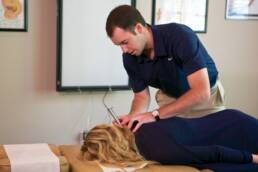
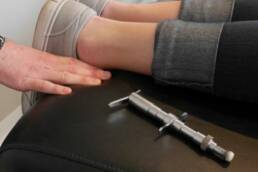
- Torque Release Technique adjustments for spinal joints and extremities – gentle, instrument-assisted, no twisting or popping
- Deep tissue massage therapy for muscle tension and soft-tissue restriction surrounding affected joints
- Red light therapy for pain management for inflammation reduction and tissue support
- Spinal decompression therapy for severe lumbar, cervical, or disc-related cases
- Targeted movement and exercise prescription to restore proper joint function and prevent recurrence
Coordinated Care When Needed
For cases that require it, we coordinate directly with your primary care physician, orthopedist, rheumatologist, or physical therapist. Joint pain that’s part of a systemic condition (rheumatoid arthritis, lupus, psoriatic arthritis) needs medical management alongside conservative care; we’re happy to function as one piece of that broader team rather than positioning ourselves as a replacement for it.
Long-Term Joint Health, Not Just Pain Relief
Conservative joint pain treatment has two phases. Phase one is symptom resolution – getting you out of acute pain and restoring basic function. Phase two, which most pain-only treatments skip, is addressing why the pain developed in the first place: gait patterns, muscle imbalances, postural habits, training errors, and lifestyle factors that produced the dysfunction.
Patients who only address phase one consistently come back six to twelve months later with the same problem returning. Patients who do phase two work – usually less intensively, on a longer timeline, often integrated into a broader wellness pattern – typically stay better.
For the framework of how preventive chiropractic care fits into long-term joint and overall health, see our blog on preventive chiropractic care. For the broader wellness pillars – movement, sleep, nutrition, stress, recovery – that influence joint health independent of any specific intervention, see our take on the 5 pillars of health.
Frequently Asked Questions
Where is Apex Chiropractic actually located?
Apex Chiropractic is in Louisville, Colorado – about 15 minutes from downtown Boulder. We serve patients from across Boulder, Louisville, Lafayette, Erie, Broomfield, Superior, and the surrounding area. For Boulder residents, the drive is a quick one and parking at our office is free and easy – which is its own argument over going somewhere downtown.
Will I have to stop hiking, skiing, or cycling while I’m in treatment?
Almost never. For most joint pain, complete rest is actually counterproductive – it deconditions the surrounding muscles, reduces synovial fluid circulation, and prolongs recovery. We typically recommend modified activity rather than no activity, and we work with your specific sport/activity profile to identify what to keep doing, what to scale back, and what to temporarily avoid. The goal is to keep you doing what you love while we address what’s interfering with it.
Can chiropractic help with arthritis?
Yes, often meaningfully – though it’s important to be clear about what’s possible. Conservative care doesn’t reverse arthritis. What it can do is reduce pain, improve joint function and mobility, slow the progression of compensation patterns that make arthritis worse, and keep you active longer. Many patients with moderate osteoarthritis find that consistent chiropractic care substantially reduces their reliance on medications and delays or prevents the need for joint replacement surgery.
How many visits will I need?
It depends on what’s causing your joint pain, how long it’s been going on, and what your goals are. Acute uncomplicated cases sometimes resolve in 4 to 8 visits. Chronic patterns with multiple contributing factors typically take longer. We’re upfront after the initial evaluation about what realistic recovery looks like for your specific situation. We don’t sell long care packages to patients who don’t need them.
What if I’ve already tried physical therapy and it didn’t help?
Common situation. Physical therapy is excellent for the specific things it addresses – typically isolated muscle and joint mobility work for a defined diagnosis. Chiropractic adds the spinal alignment, kinetic-chain assessment, and integrated multi-modal approach that PT doesn’t typically cover. For many patients whose PT plateaued, chiropractic care provides the missing piece. The two work well together when both are appropriate.
What if I’ve already had joint surgery?
Post-surgical chiropractic care is often valuable – coordinated with your surgeon’s recovery protocol and your physical therapist. Many post-surgical joint patients have lingering compensation patterns elsewhere in the body from the recovery period that benefit from targeted attention. Always coordinate post-surgical care with your surgical team to make sure timing and approach are appropriate.
Will my insurance cover chiropractic care for joint pain?
Many insurance plans cover medically necessary chiropractic care for joint pain, though coverage varies. Our front desk verifies your specific benefits before your first visit. We also offer new patient specials for patients paying out of pocket or trying chiropractic for the first time.
What does the first visit look like?
See our complete walkthrough of what to expect on your first day. For joint pain patients specifically, the initial visit centers on the kinetic-chain assessment, identification of the actual source of your symptoms, and the development of a treatment plan tailored to your specific joint and activity profile.
Get Back to the Boulder Life You Actually Want to Live
Whether your joint pain is from years of skiing, running, climbing, cycling, or just the cumulative wear of an active Colorado life, conservative chiropractic care is often the right starting point – particularly when surgery isn’t urgent and you’d prefer to try non-invasive options first. Apex Chiropractic is fifteen minutes from downtown Boulder, with free parking and an honest approach to what we can and can’t help with.
Call (720) 328-1790 or contact us to schedule. New to the practice? Take advantage of our new patient specials. For the specific category of treatment programs we offer, see our specialty treatment programs page.
About the Author
Dr. Shane Kurth, D.C., BCN is the founder of Apex Chiropractic in Louisville, Colorado, and is board-certified in chronic intractable pain and neuropathy. A graduate of Auburn University with a degree in microbiology, Dr. Kurth completed extended coursework in sports chiropractic and extremity adjustments during chiropractic school, allowing him to treat knees, shoulders, hips, elbows, and other extremities – not just the spine. He uses the research-driven Torque Release Technique with every patient and has been voted Best Chiropractor in Boulder County for ten consecutive years by the readers of Boulder Weekly.
Dr. Kurth treats Boulder-area residents with joint pain, chronic pain conditions, sports injuries, and post-surgical compensation patterns – working in coordination with orthopedists, primary care physicians, rheumatologists, and physical therapists where appropriate. He is an active member of the International Chiropractic Association (ICA) and the International Federation of Chiropractors & Organizations (IFCO). Learn more about Dr. Kurth →

Ready to See the Best Chiropractor in Louisville, CO?
Apex Chiropractic believes in thriving through life, not suffering in it. We believe that the activities that we want to partake in do not only desire but are necessary, just as necessary as our daily activities. In order to thrive in life and not suffer, we have to be completely in tune with our bodies. Schedule your appointment with us, today.
Like this article? Spread the word!
Related Posts
April 6, 2023
Torque Release Technique Vs Traditional Chiropractic
Every Chiropractic Dr. has their own go-to method and strategy when relieving pain and…

April 5, 2023
Chiropractic Care Can Fix Your Check Engine Light
Is Your Check Engine Light On? Routine Chiropractic Care Treats the Source NOT the…
April 4, 2023
Why is “The Integrator” the best way to get a chiropractic adjustment?
The Torque Release Technique and the Integrator were recently developed and have allowed…


